Questions we hear often
Where does My Land Greek Oregano come from, specifically? +
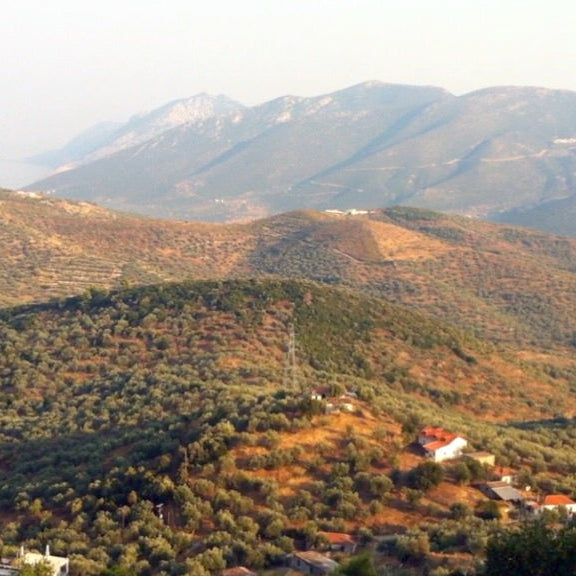
My Land Greek Oregano is grown across the slopes of Mount Olympus in northern Greece, at about 1,000 meters above the sea. The herb is sourced from several family farms in the region. Each farm follows traditional Greek farming methods. The whole supply chain stays within the same mountain region, which is why the listing names Mount Olympus specifically and not a generic "Mediterranean" origin.
Why does altitude matter for oregano? +
Oregano grown at 1,000 meters faces a shorter growing season, colder nights, and a more intense sun than oregano grown in lowland fields. The plant responds by producing more essential oils, which is where the strong, peppery aroma comes from. Lower-altitude oregano (the bulk grade typically sold in supermarket jars) has a milder, less concentrated flavor. The altitude is the reason a small pinch of Mount Olympus oregano carries a dish.
What is the difference between Greek oregano, Mediterranean oregano, and Mexican oregano? +
These are three different plants. Greek oregano (Origanum vulgare hirtum) is the variety used in real Greek cooking: strong, slightly bitter, high in essential oils. Mediterranean oregano (Origanum vulgare) is the same species without the hirtum subspecies; it grows across many countries and tastes milder. Mexican oregano (Lippia graveolens) is not in the same plant family at all; it tastes more like lemon verbena and is used in Mexican cuisine, not Mediterranean. If a recipe says "Greek oregano," it means the first.
Is this oregano hand-harvested? +
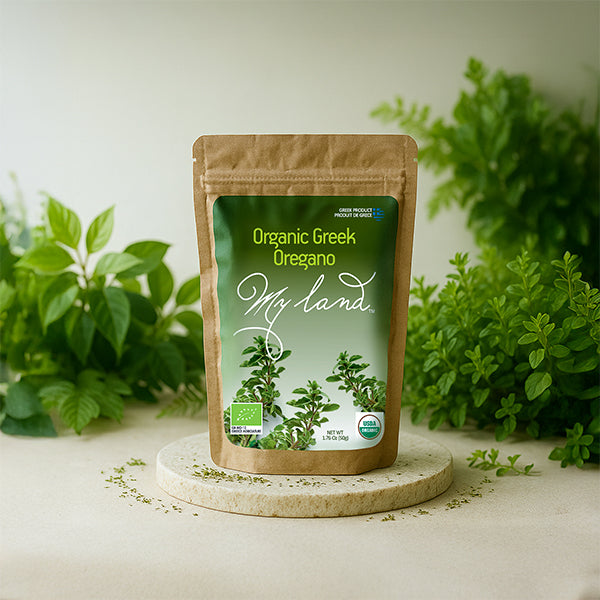
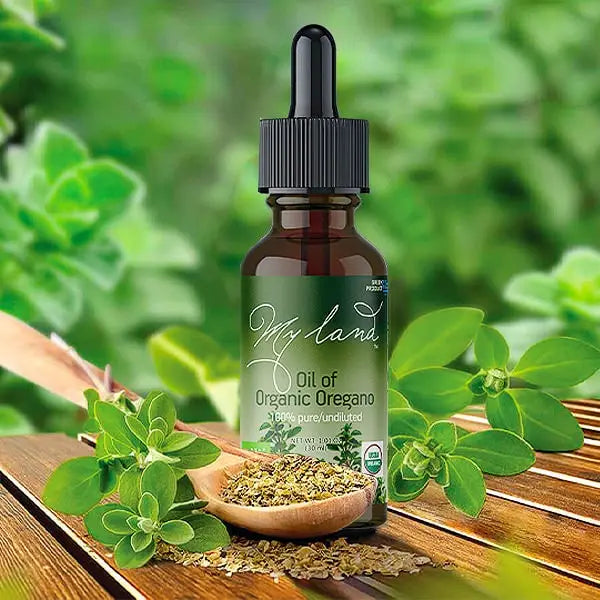
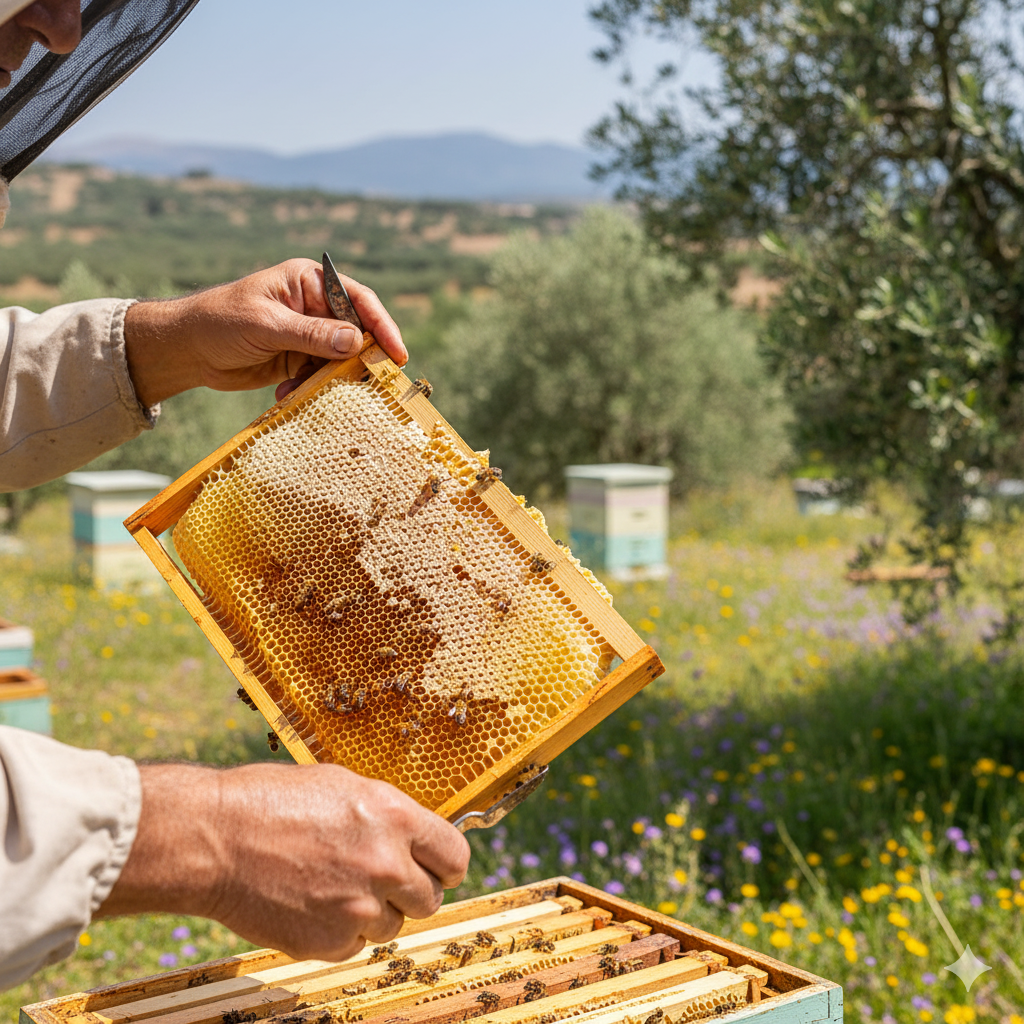
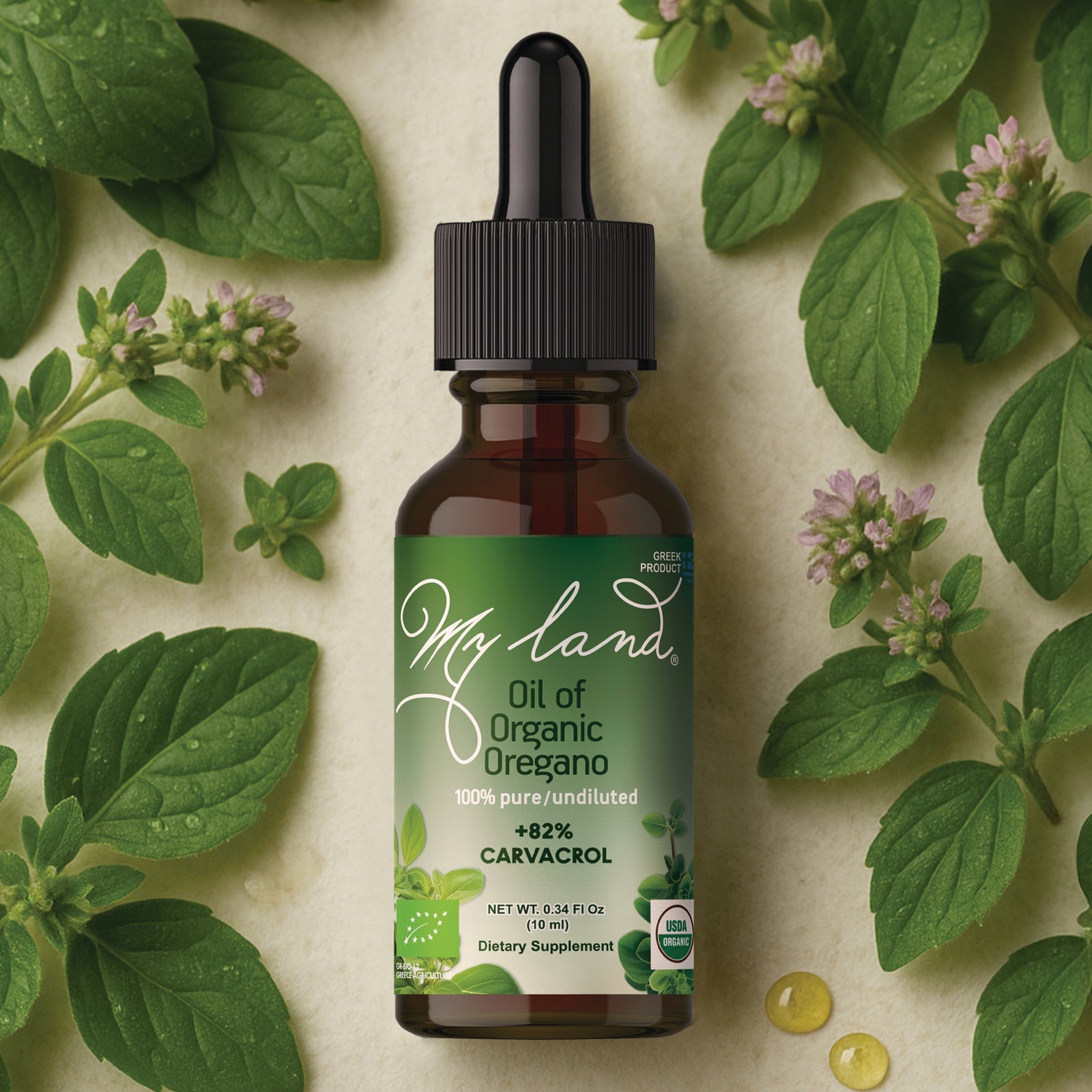
Yes. All My Land herbs, teas, honey, olive oil, and the oregano used in My Land oil of oregano are hand-harvested. On Mount Olympus, the herb is hand-harvested at peak season by the family farms that grow it. Machine harvesting is faster but breaks the leaf and lets stems through. Hand-harvesting keeps the leaf whole, which is what "cut and sifted whole-leaf" on the pouch refers to.
Why is My Land more expensive per ounce than other Greek oregano? +
A few reasons together. The herb is hand-harvested, not machine-harvested. It comes from a small group of family farms on a single mountain, not from a commodity supply chain. The pouch is resealable kraft, light-blocking, designed to preserve essential oils after opening. The pricing reflects what the supply chain costs to keep this small. Bulk oregano sold by the pound from blended sources will always be cheaper per ounce. A pinch of high-altitude Greek oregano also goes further than a teaspoon of bulk-grade oregano, so the per-serving cost evens out for most home cooks.
How do I use Greek oregano in cooking? +
Classic uses in Greek cooking: sprinkled over Greek salad with feta and olive oil, rubbed onto lamb or chicken before grilling, stirred into tomato sauces and slow-cooked stews, and finished over lemon-roasted potatoes. A pinch is enough for most dishes because the essential oil content is concentrated. Crumble the dried leaves between your fingers before sprinkling to release the aroma. The same leaves can be brewed as a traditional Greek herbal tea in hot water.
Why is the color vibrant green when other oregano I have bought looks brown? +
Vibrant green is the freshness signal for real Greek oregano. The color comes from the chlorophyll in the leaf, which is preserved when the herb is hand-harvested, sun-dried at low temperature, and stored in a light-blocking pouch. Brown oregano usually means the leaf has been over-dried, oxidized after the package was opened, or bulk-stored for a long time. Color is not a perfect quality marker, but vibrant green and a strong aroma together are reliable signals.
Is My Land Organic Greek Oregano certified organic? +
Yes. My Land Greek Oregano is certified USDA Organic and EU Organic. The certification is verified through CCOF, which audits the whole supply chain from farm to packaging. Organic certification means no synthetic pesticides, no GMO seed, and verified handling practices. CCOF's tagline puts it simply: organic is non-GMO and much more. The product is not certified by the Non-GMO Project (a separate, narrower verification program).
How fresh is the oregano, and where is the best-before date? +
Each pouch is packed and sealed to protect freshness, with the best-before date and lot number printed on the back. The resealable, light-blocking kraft pouch keeps the leaf fresher after opening than a clear jar that lets in light and air. Stored closed in a cool, dry cupboard, the aroma holds for many months. A strong scent the moment you open the pouch is the freshness signal.
Is this pure oregano leaf, or is it full of stems and twigs? +
Pure leaf. My Land oregano is cut and sifted, so hard stems and twigs are removed and only the leaf goes in the pouch. A common complaint about cheap oregano is stems, twigs, or matter that is not oregano. With whole-leaf cut and sifted oregano you get the part of the plant that carries the aroma and flavor, not filler. The species is Origanum vulgare hirtum, the Greek oregano used in real Greek cooking.
How much oregano do I get, and is the portion small? +
The pouch holds 1.76 oz (50 g), about 70 servings. That is a real portion, more than the small jars sold in many supermarkets. Because high-altitude Greek oregano is concentrated, a pinch is enough for most dishes, so the pouch lasts a long time. The net weight is printed on the front of the pouch.
Will the oregano be strongly aromatic, or weak and muted like some dried oregano? +
The most common complaint about dried oregano is weak or missing aroma. My Land oregano is grown at about 1,000 meters on Mount Olympus, where the plant produces more essential oil, so the dried leaf keeps a strong, peppery scent. You should smell it as soon as you open the pouch. Vibrant green color and a clear aroma are the signs to look for, and a pinch carries a dish.